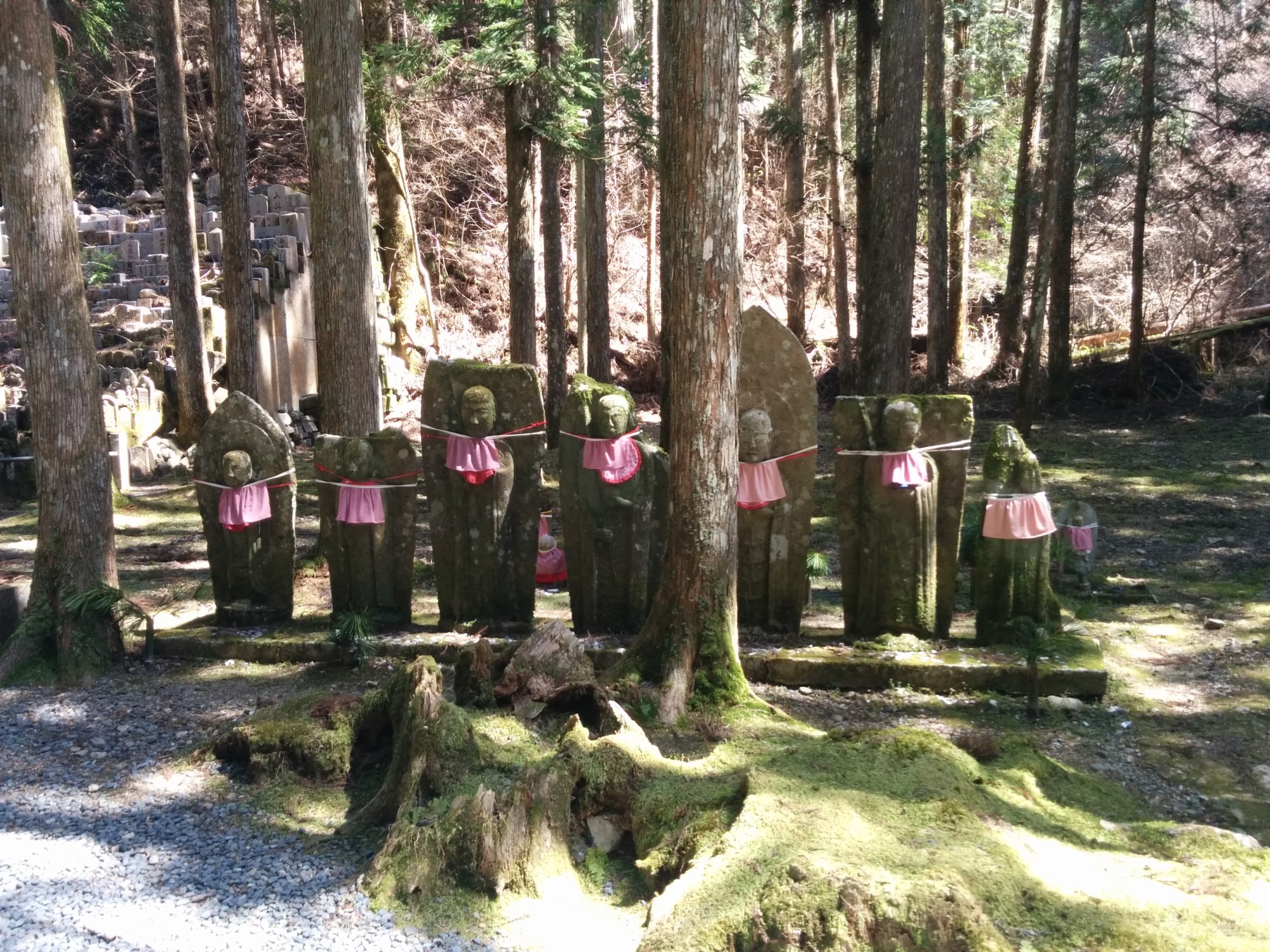
After Takayama we headed to our last mountain town: Mt. Koya (or Koyasan). Koyasan is the headquarters of the Koyasan sect of Shingon Buddhism and has a rich 1,200 year history. The town is made up of many Buddhist temples which will gladly host tourists, but for a high price. It was really strange to walk around this town that looked so ancient… and find modern vending machines around every corner! The town is quite used to accommodating tourists, and there are buses and English speakers who can direct you to the right bus at the main train station.
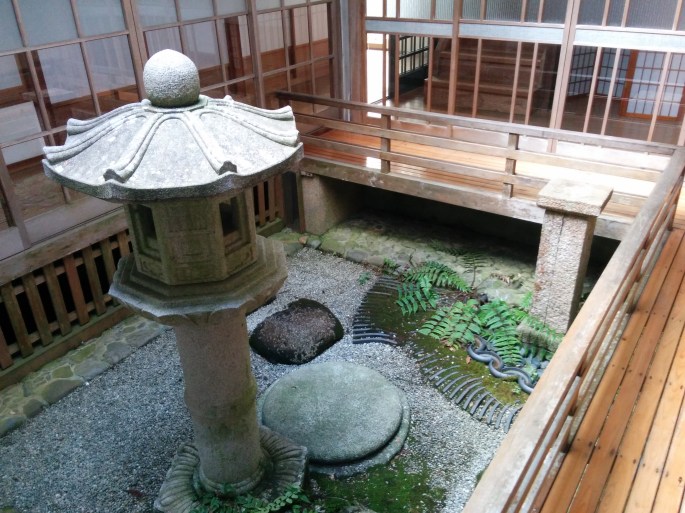
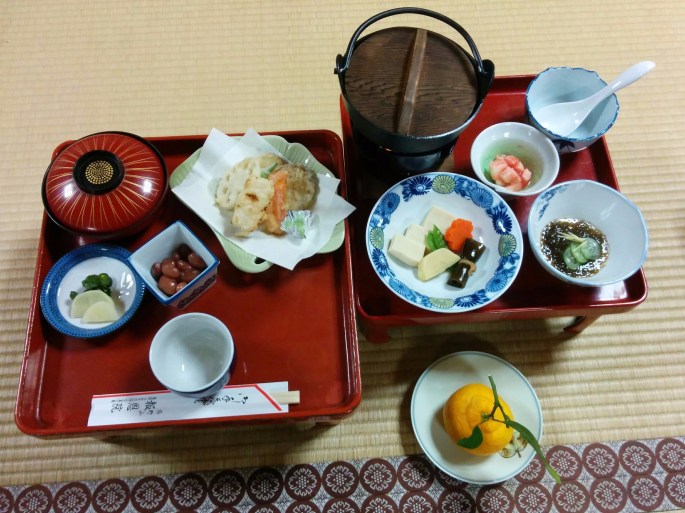
We stayed at Hoon-in Temple, which was one of the cheaper ryokans. A ryokan is a traditional style of Japanese inn originating in the Edo period. Still, it cost us 21,600 yen for two people for one night. A traditional vegetarian dinner meal and breakfast are included (extremely filling and extremely delicious!), and we were invited to join morning prayer.
Staying in the temple was one of the highlights of our trip. It was really interesting to see how the monks live and experience their hospitality, and I was so glad I got to experience a ryokan. Plus, the monks had a sento (Japanese bathhouse), which was delightful. It’s quite funny how touristy Koyasan has become – I’m willing to bet most of the monks’ income comes from hosting tourists!

We spent a fair amount of the day walking around the town, which was filled with gorgeous temples and buildings. We learned that the entire town had gone down in flames at least 4 or 5 times over the past few centuries and everything had to be rebuilt each time. Suggestion: don’t build everything out of wood next time? There were also many beautiful Zen rock gardens. In fact, the biggest Zen rock garden in Japan is located in Koyasan at Kongobu-ji Temple.
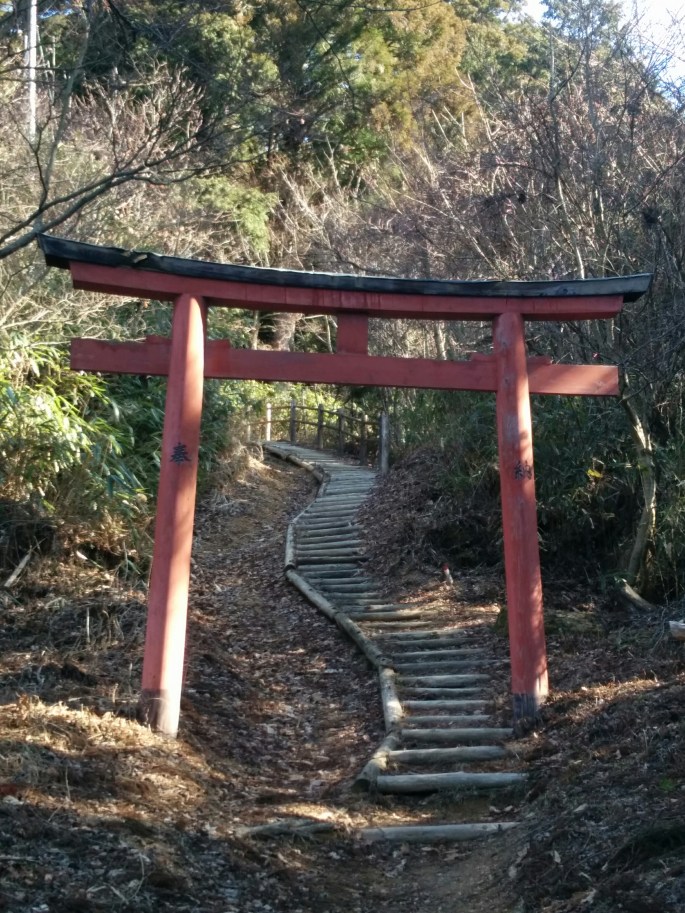
After our stroll, we headed to the Daimon Gate, a majestic gate which is near the entrance to some beautiful hiking trails. We went on a beautiful hike until dinner – a real hike in the forest with plenty of elevation gain. I really enjoyed hiking in Japan. One unique thing that I noticed is that the summit of most mountains holds a small shrine where travelers can pray and leave offerings. There are many trails in Koyasan and you could spend a lot of time hiking in the area. In fact, many pilgrims make the hike up to Koyasan on foot – a 23.5 kilometer hike from Kudoyama Station along the Koyasan Choishi Michi trail, which takes you straight up the mountain and is surely not for the faint of heart. Maybe we’ll try it next time we visit!
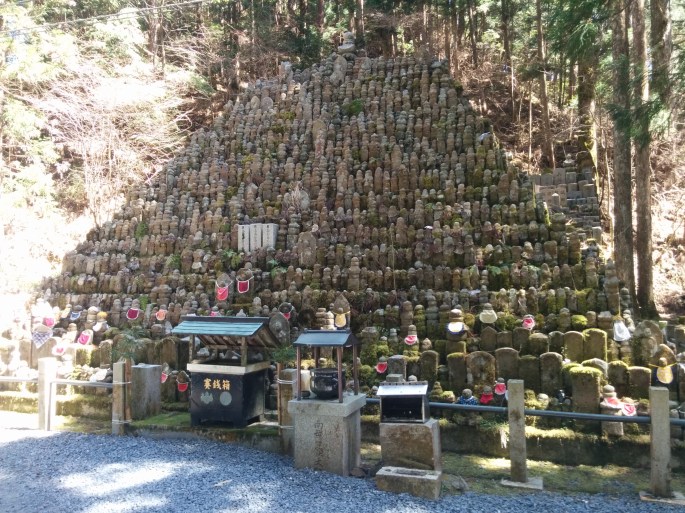
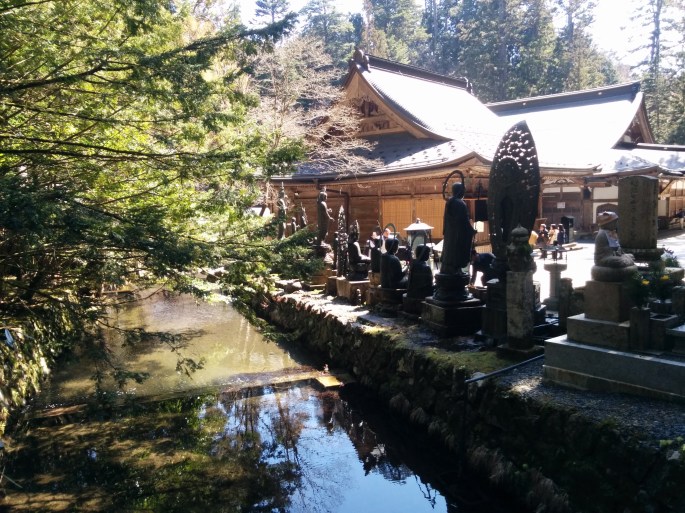
The next day we visited Okuno-in Temple, a UNESCO World heritage site consisting of over 300,000 tombstones and the mausoleum of Kobo Daishi, the founder of Shingon Buddhism. When you enter, you can feel that it is a very old and sacred place. It didn’t feel morbid or heavy to walk around the tombstones – on the contrary it felt very light and free. There were a variety of ancient tombstones and more recent ones: some memorable ones included a spaceship shaped tombstone and a tombstone dedicated to dead bugs (erected by a pesticide company).
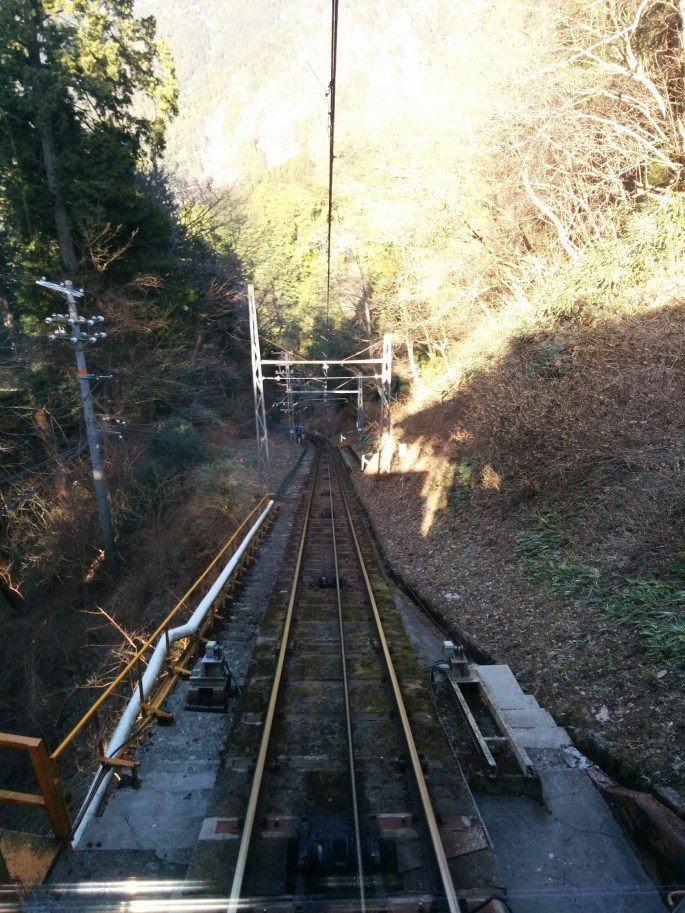
Finally, we hopped back on the train to Kyoto. Getting to and from Koyasan takes some effort (4 transfers and 161 minutes to Kyoto), but it was worth the long journey. And we got to take this cable car on the way there and back!
 WanderLiz